
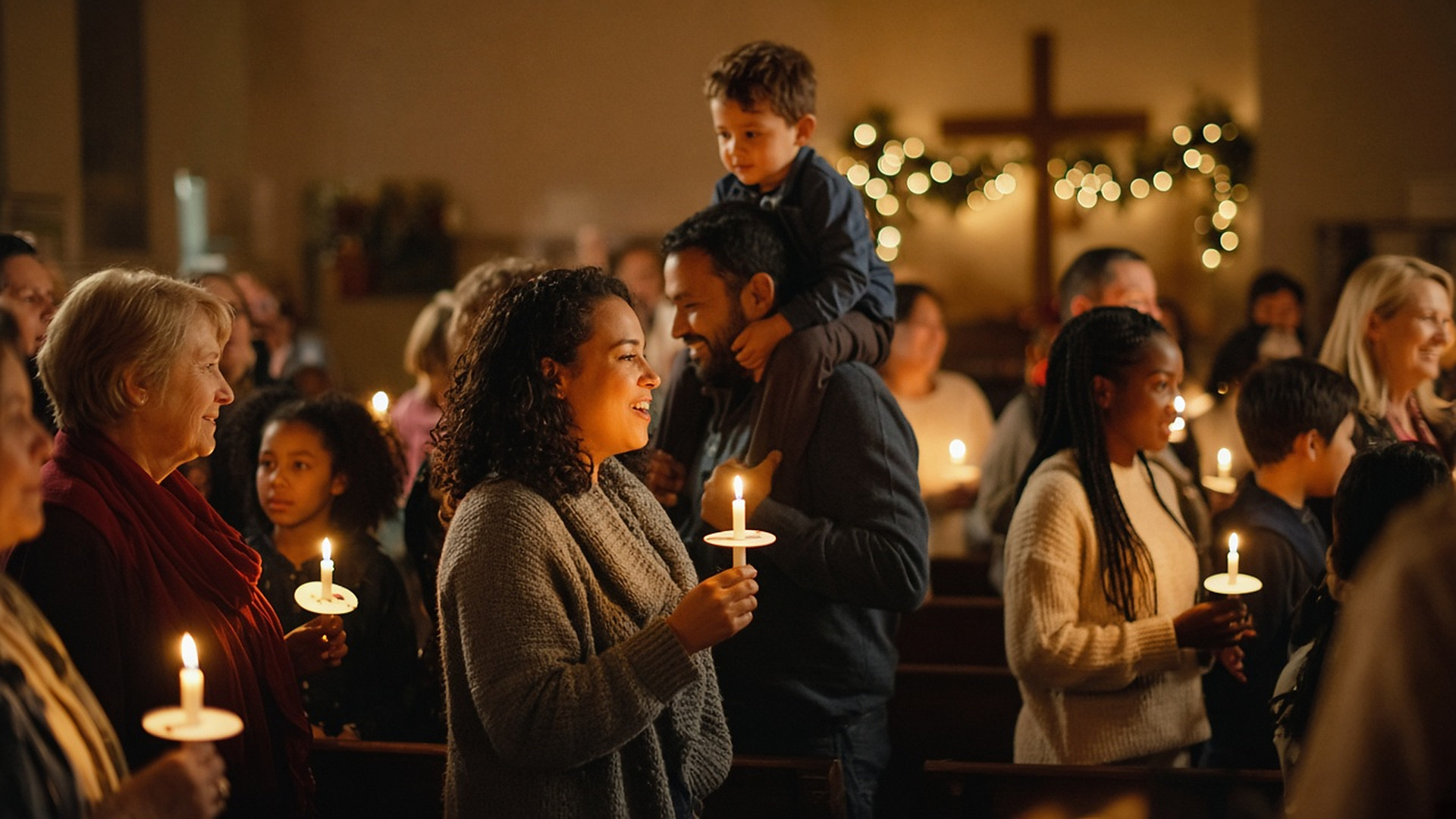
The lights go down, the flame passes from candle to candle down every row, and the whole room starts in on Silent Night. For a few minutes, it’s about as beautiful as church gets. And then everyone leaves in silence. Nobody learns a name, nobody starts a conversation, and the family that came for the first time walks right back out to the parking lot the same way they came in.
That silence isn’t an accident. Most of us plan it that way. We go for “traditional and warm, fuzzy feelings,” and that’s exactly what people get … but there’s no lasting impression, and come January, those guests are nowhere to be found.
The One Night Guests Say Yes
Christmas Eve is the one worship service per year where it is still politically correct to tell a coworker that they’re going to church. Nobody pushes back, period. Lifeway Research found that 48% of Protestant pastors say Christmas Eve is the biggest night of the season for their church, and 56% of Americans who don’t usually attend at Christmas say they’d likely come if someone they know invited them.
So the guests are coming, and a whole lot more would come if somebody asked. The real question is what they find when they get there.
Warm and Fuzzy Only Reaches Church People
Warm and fuzzy works on folks with “significant church experience” or a “latent church experience.” They come out of nostalgia, and the candles and carols take them right back to the Christmas Eves they remember. (Nothing wrong with that, as long as they aren’t the only people you’re trying to reach.)
But the guest with little church background hears familiar songs and the same Scripture reading Linus has read on national TV every Christmas since 1965. They hear nothing they haven’t heard before, or if they’re brand new to church, “most of it is completely meaningless.” Truth? You can’t make a lasting impression on somebody with a service that only makes sense to the people who already come.
A Service Isn’t a Commodity
The second mistake runs even deeper. We treat the service as if it is some sort of a commodity, rather than an opportunity to make connections. We hand out the program, light the candles, sing the carols, and send everybody home.
And most churches never, or virtually never, get contact information, since we don’t want to be “intrusive.” Listen, a guest who leaves without anyone learning their name is a guest you have no way to welcome back. You can’t build a relationship with someone you can’t find.
What Remarkable Looks Like
An unforgettable Christmas Eve is remarkable. And by the word remarkable, I mean it is worthy of remarks. It’s worthy of talking about. It has created a new memory, not just massaged an old memory or made us feel warm and fuzzy via nostalgia.
So what does that look like? Picture shepherds with flashlights waving guests into the best parking spots, and the members park at the far end of the lot. Greeters in elf hats welcome families at the door, and the members sit up front so guests get the back rows they “really” want. The kids get invited into an impromptu Christmas pageant, and within an hour of getting home, the family hears the doorbell and finds a gift on the doorstep from the Christmas Magi, with homemade bread and a jar of local honey inside.
A Christmas dream of sugar plums? Hardly. Every part of this vision is being acted out in churches we’ve attended, worked with, or were associated with over the years.
What Happened at Raytown
One year at Raytown Christian Church, when I was pastor there, we did everything on this list, and it was amazing. We actually got several families to become active in the church from this event.
Very rarely do first-time visitors or even CEO Christians (that stands for Christmas, Easter only) return, and we actually saw people return because of the event.
Where to Start This Year
Most churches add pieces of it a little each year, so don’t panic if you can’t do it all by December 24. Start with these four things, in this order.
First, re-envision what the Christmas Eve worship service will look like. Keep the traditional carols and Scripture, but plan on preaching a truncated sermon that launches or introduces the upcoming series that will be starting the week following Christmas.
Second, make that sermon address some specific pain point your target audience may be feeling. Then build a follow-up series that will solve some problem they’re experiencing, so they’ve got a reason to come back the very next week.
Third, make sure you get contact information, and not haphazardly. EVERYONE in the Christmas Eve service fills out a connection card. Then use it fast. Bill Easum’s research through The Effective Church Group found that following up within 24 hours gives you an 85% better chance a guest will return.
Fourth, after that, do whichever of those Christmas Eve ideas is reasonable and doable in your church’s context. Pick what fits this year, and add more next year.
Sure, it’s more work than lighting candles and singing Silent Night. Some of your members will grumble about parking in the back lot. (They’ll survive.) But Jesus didn’t send us to put on a nice show once a year. He sent us to make disciples, and your next disciples might be sitting in the back row this Christmas Eve, waiting to see if anybody notices them.
Do the Right Things Consistently
The truth is, working harder doesn’t grow churches. Doing the right things consistently does. That’s why I created the Growing Church QuickStart Track. It’s one clear, doable tactic every week … practical actions you can implement in 30 minutes that actually bring in new people and help you keep them.
You don’t have to keep putting up with empty pews. Start your 14-day free trial today: https://go.effectivechurch.com/quickstart
P.S. Want to walk through all of this with me? Join me for a free Catalytic Conversation, Building a Christmas Eve Experience that No One Forgets, on Thursday, November 19, 10:00–11:00 AM CT.