
Word Count: 742 – Est Reading Time: <4 Minutes
What’s Up
Your members loved Sunday’s sermon, and the back row is still empty. If your preaching isn’t reaching the people who’ve never heard the gospel, the starting point is the problem.
So What
Seminary taught most of us to start with the text, dig out the meaning, and then apply it to life. That works with people who already trust the Bible. Your unchurched neighbors don’t, and the minute you open with a verse, you’ve handed them a wall to stand behind. Paul knew better. In Athens, he started with their altar and worked toward the gospel from there.
The Point Is
- Open with the cultural itch. A cultural itch is the hurt, question, or emptiness your neighbors can’t scratch on their own. Name the issue, show how it’s hitting society, then show how it’s hitting them. Hold the scripture for now, because you’re exposing the culture before you expose the text.
- Honor what culture already tries. Culture’s offering solutions, and some of them work. Name the ones that do and skip the ones that flop, since trashing culture’s answers invites defensiveness. Paul didn’t call the Athenians’ idols evil in Acts 17. He used their altar as a launching pad.
- Use the “Isn’t it interesting” move. Pick a cultural solution that’s working. Then say, “Isn’t it interesting that Jesus said almost the same thing?” Most solutions that work have roots in scripture. Your authority rests on logic and experience first, so the wall never goes up.
- Teach the text without presuming background. Now read the scripture and teach it well, with real depth. Define the terms, set the scene, and introduce the characters, because your neighbors don’t know an epistle from an apostle. Good exposition for this crowd assumes nothing, so explain who wrote it, who it was written to, and why it mattered. Then land it with what your listener does Monday morning and an invitation to change one behavior.
And … ?
A generation ago, even folks who never darkened a church door treated the Bible with some respect. They might not have believed it, but they honored it. That world’s gone. Today, most of your neighbors see the Bible as the church’s book, an old religious text with little to say about their Tuesday afternoon. So when your sermon opens with “Turn with me to …,” you’re asking them to accept an authority they’ve never granted you. They’ll check out before you finish the verse. That’s why exposition has to be non-presumptive. You teach the text without assuming your listener brings any background to it.
Picture your neighbor at the kitchen table, bills spread out, wondering how the month’s going to work. She’s looking for an answer, and she’s never heard of Philippians. Start with her problem and she’ll lean in. Start with a footnote and she’ll reach for her phone. The itch earns you a hearing. The text delivers the transformation. You need both, and the order matters.
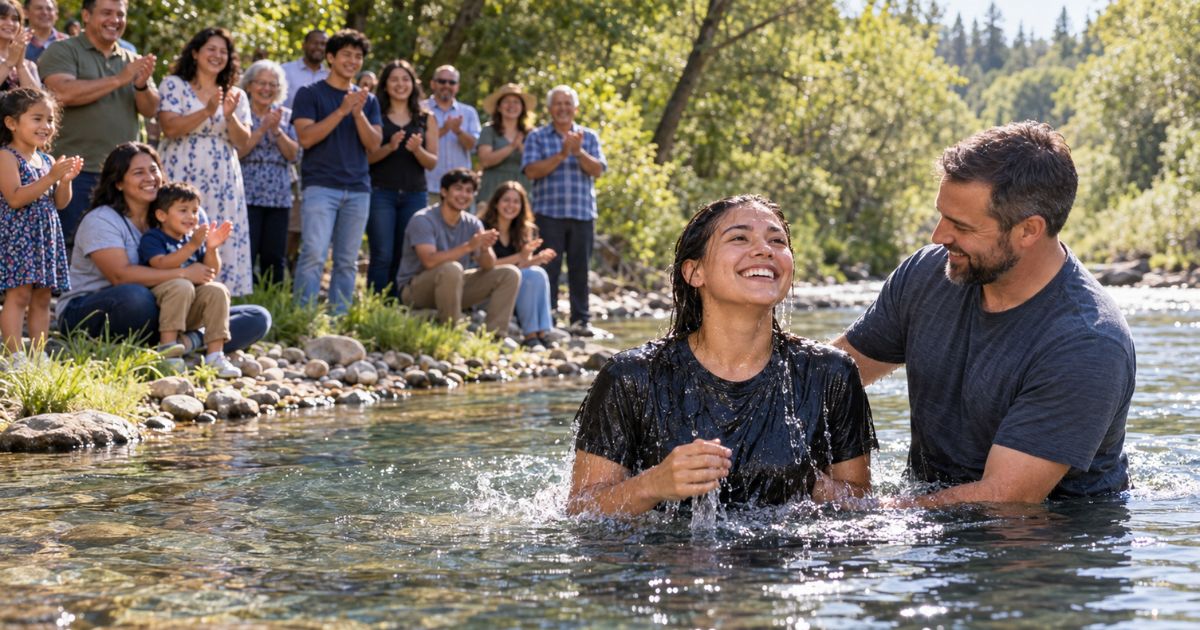
Pastor Chris in Texas, is one of the pastors in our Growing Church Network, and he rebuilt his preaching around this approach. He starts with culture’s questions and brings scripture in second. Since the shift, his baptism rate has skyrocketed, and he now regularly baptizes 20 or more people every year. Think about what that number means. Every one of those baptisms is a life Jesus changed, and it started with a pastor who was willing to change where he began. That’s a hard shift for anyone trained to protect the text, and the text hasn’t gone anywhere. It’s still the destination.
Delaying the Bible isn’t dodging it. The sequence is the strategy: Culture’s question first, scripture’s answer second, application last. Your members benefit too. They wrestle with the same itches your neighbors do, and a message that solves a real problem feeds them better than a lecture ever did. For more on building the message itself, see Tell ’em What to Do. Then try it on your next sermon. Write down the three biggest itches in your community this month, pick one, and find the cultural fix that’s working. Preach one series this way and watch who shows up, who stays for coffee, and who asks about baptism. Keep the series short, three or four weeks, so you can see what works quickly.
Action!
Join me this week for the free Catalytic Conversation on Preaching for Transformation by registering here. (Thursday at 10 CDT)